Fintech
8 min. read time
Enterprise Bank Management
Streamlining branch operations and loan approvals into a unified SaaS platform
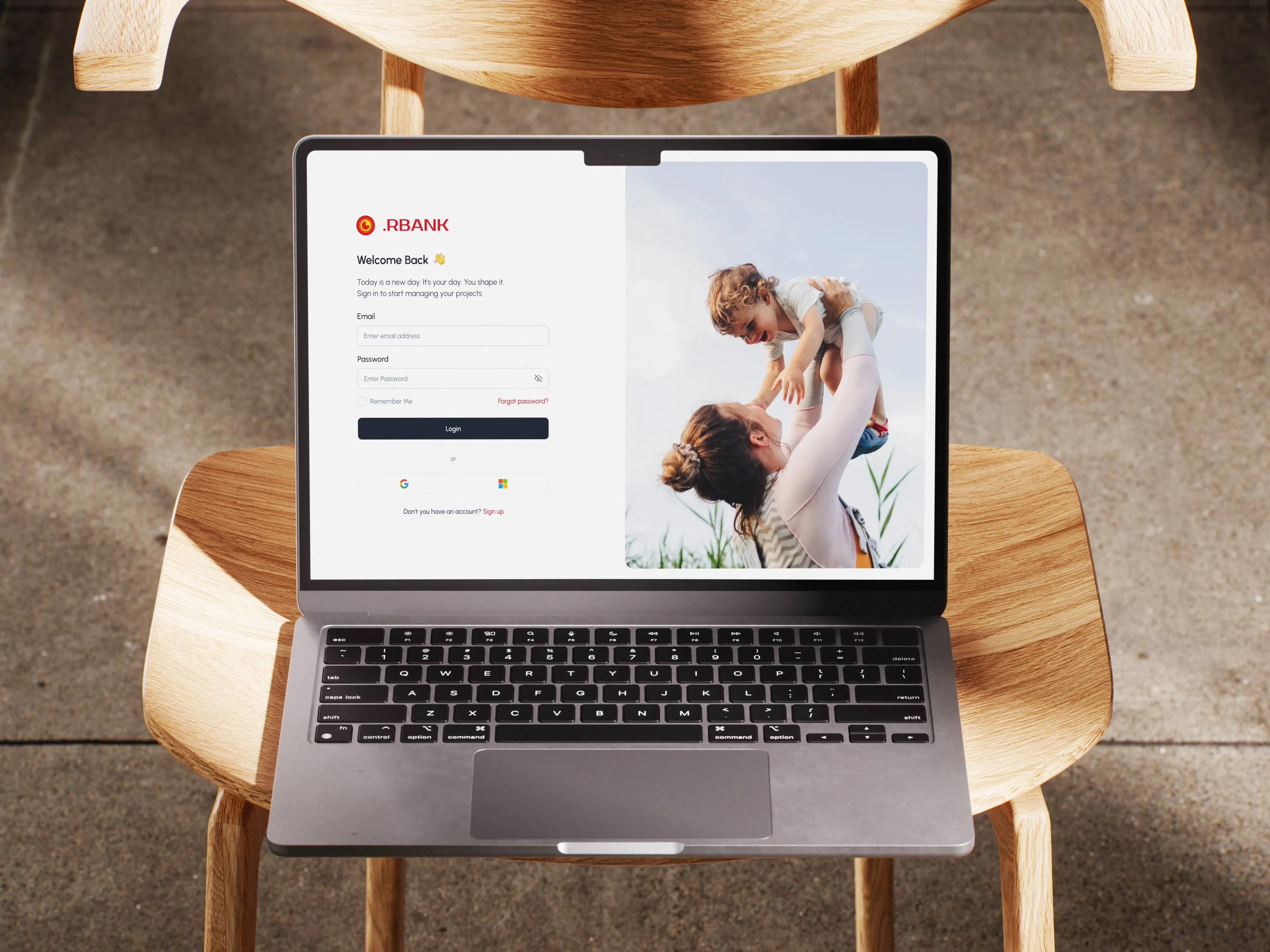
Product Designer
Aug 2024 - Feb 2025
Product Designer (me)
3 AI and 2 Backend Developers
Front-end Developer
Impact at a Glance
45% faster document retrieval (4 min → 2.2 min)
30% reduction in manual processing errors
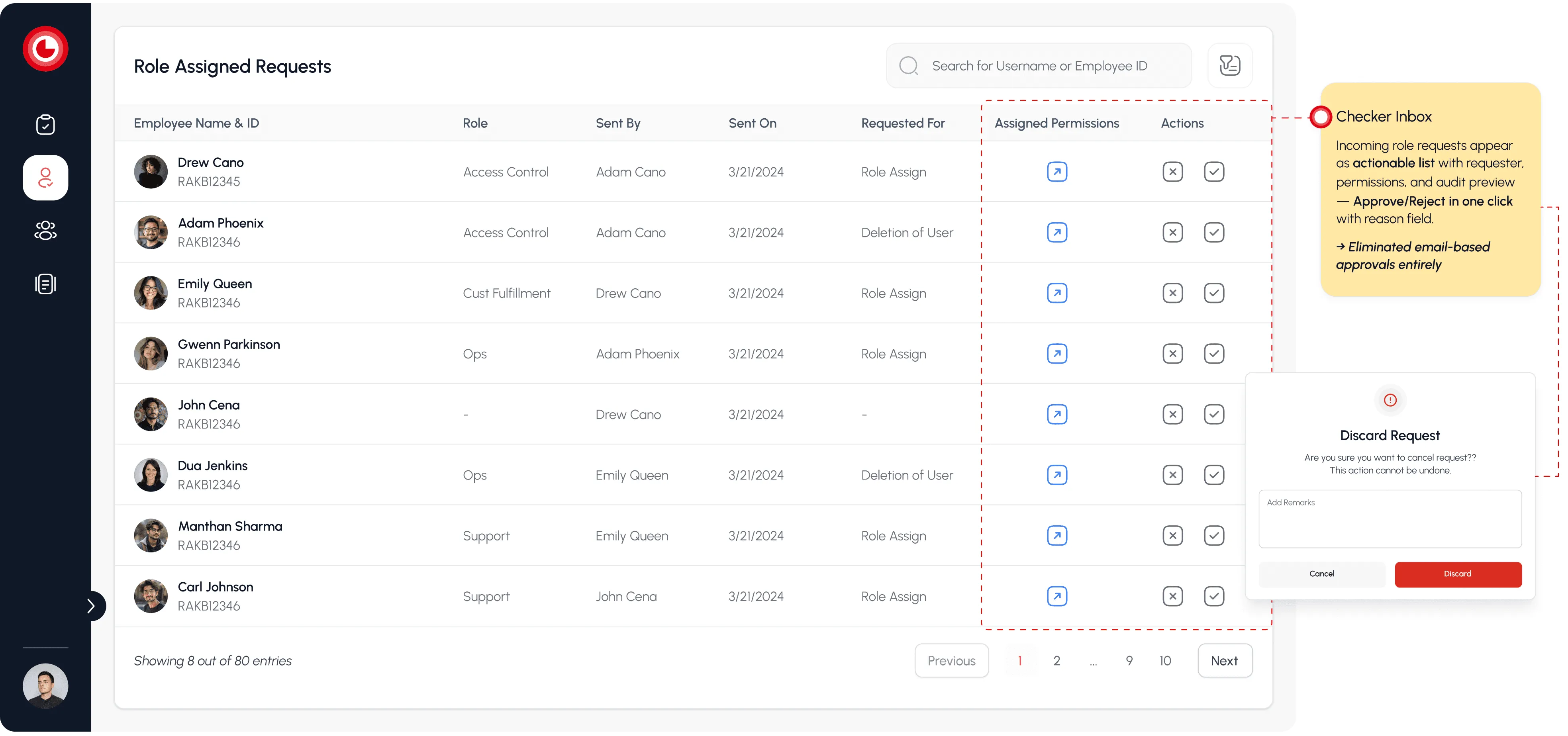
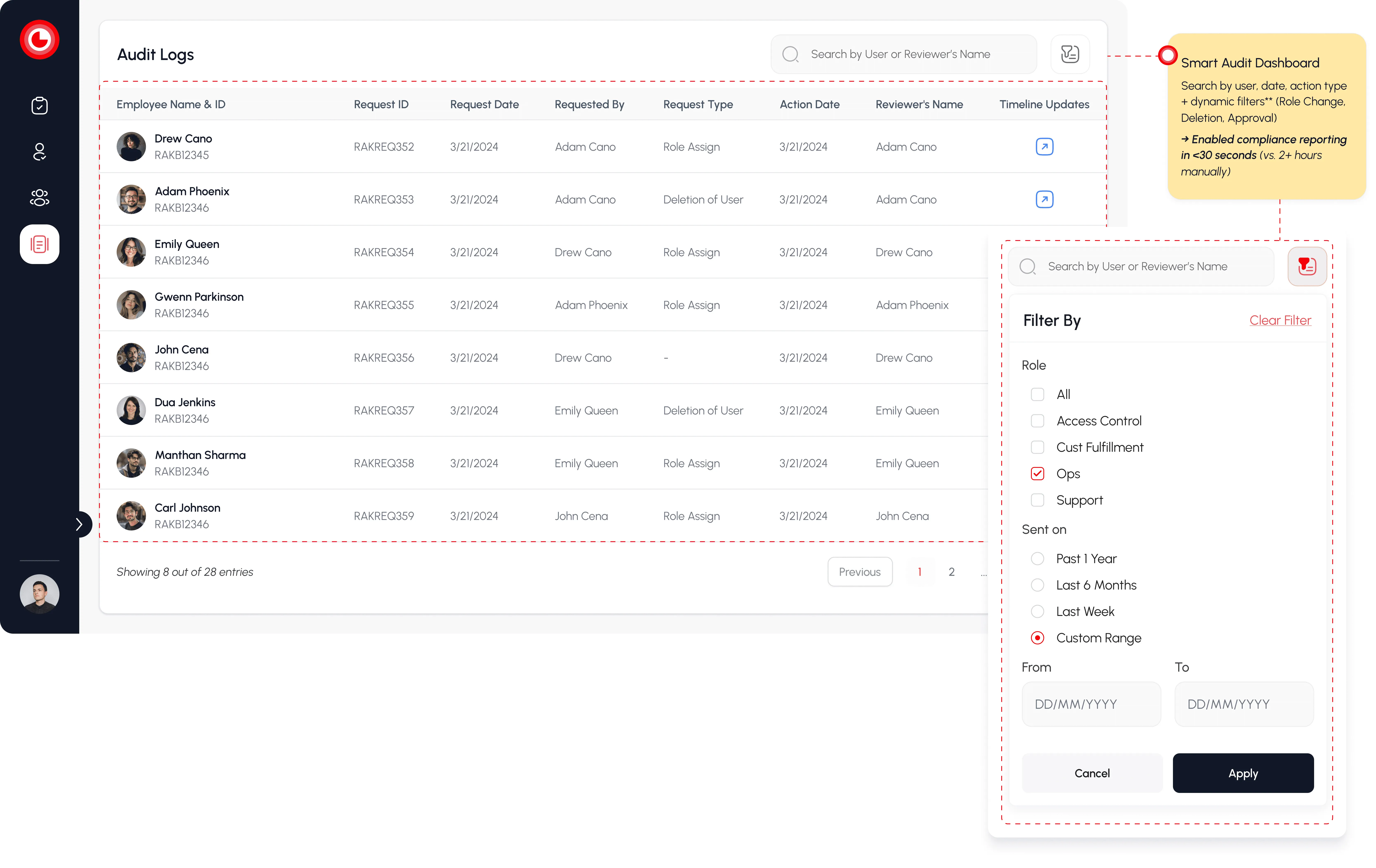
60% increase in audit transparency
“From paper chaos to a unified, role-smart digital command center - this system became the backbone of internal banking efficiency.”
The Business Context
Bank staff were drowning in fragmented workflows. Managing customer approvals and internal operational requests required bouncing between disconnected legacy systems, email chains, and paper trails. This lack of centralized data didn't just increase cognitive load for employees—it created severe operational bottlenecks and delayed processing times for customers.






Customer data lived across spreadsheets, emails, and physical folders.
Access control was manual, inconsistent, and error-prone - role approvals took 2–3 days.
Document retrieval was unpredictable, and audit trails were non-existent.
Client Quote
“We needed one source of truth - secure, fast, and role-aware. Without it, compliance and efficiency were at risk.”
The Strategic Objective
Architect a unified internal SaaS platform that centralizes request management, enforces strict role-based access control (RBAC), and drastically reduces the time-to-decision for branch managers and tellers.

Research & Insights
80%
of delays = poor hierarchy
Not lack of data — but lack of smart data surfacing. Heatmaps and session replays confirmed users were lost in noise.
3
Core Personas Defined
Through 3 stakeholder workshops, we mapped needs and access levels — building a permission dependency matrix to prevent overlap.
Core Personas

Admin
Read/Write/All
Full control, approvals, user management

Business
Read/Write (Scoped)
Edit/upload docs, OCR, task assignment

Normal
Read-Only
View-only, search, export reports
Visual Language



Adaptive tables
for small screens
Key Insight:
80% of delays were due to poor information hierarchy, not lack of data. The system needed role-aware UI and smart data surfacing.
Design Process
I followed a modular, iterative approach - balancing technical feasibility with user intuition.
Step process
A proven workflow that ensures seamless collaboration and outstanding results.
Requirement Mapping
Built user flows and permission matrices in FigJam
Outcome: Aligned design, dev, and compliance early
Low-Fi Wireframes
Created role-specific dashboard shells
Outcome: Validated - “Can a Normal User accidentally edit?”
High-Fidelity Prototyping
Designed adaptive layouts + 40+ reusable components
Outcome: Scalable across desktop, tablet, large screens
Client Review Cycles
3 rounds of feedback
Outcome: Reduced approval clicks from 5 → 2
Dev Handoff
Figma Dev Mode + weekly AI team syncs
Outcome: Seamless OCR & chatbot integration
The Execution: Designing for Data Density
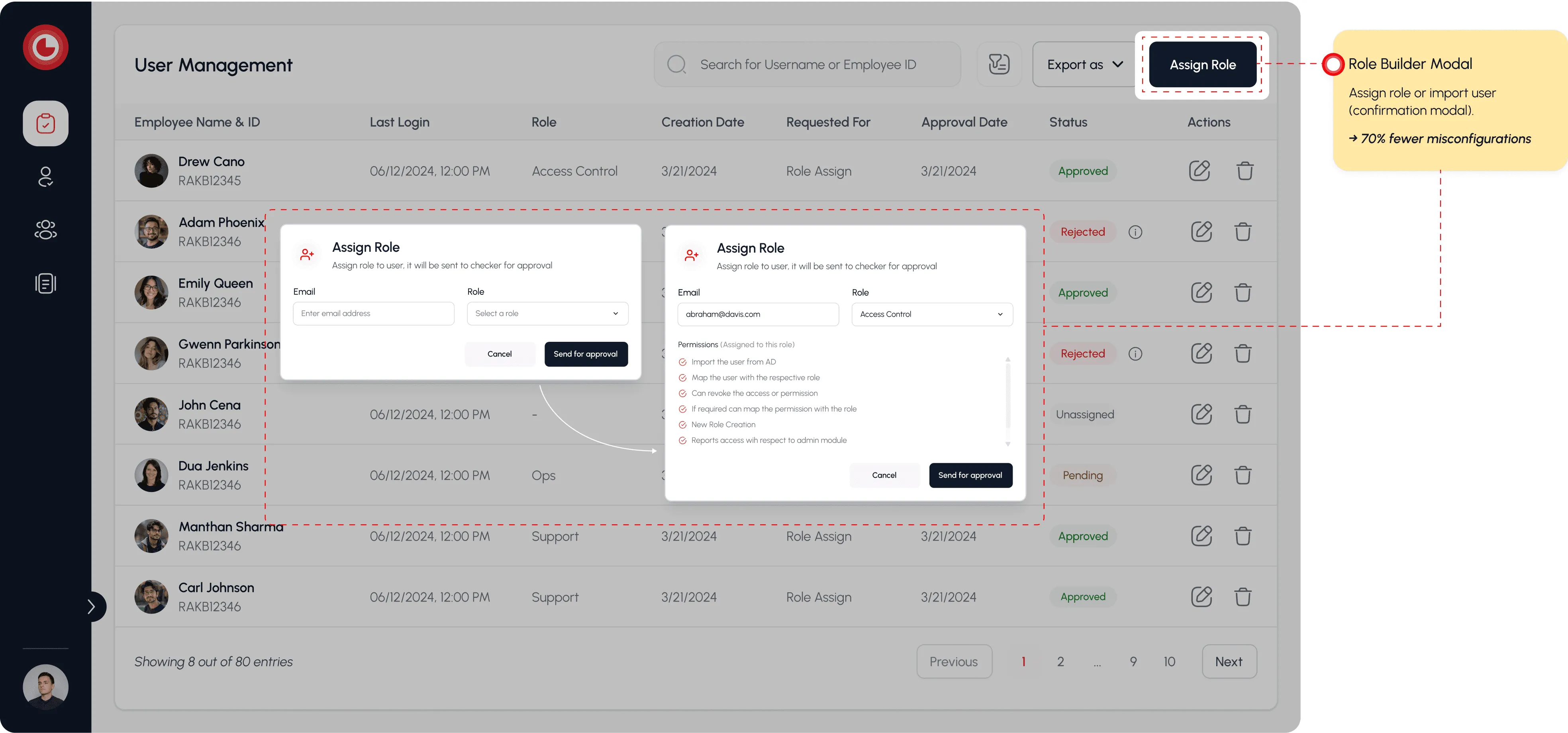
For the final interface, the primary goal was reducing cognitive load for bank staff. I moved away from cluttered, multi-page forms and designed a unified dashboard focused on high scannability. By utilizing standardized data tables, sticky headers, and clear status badges, users can now process requests rapidly without losing their place in the system.
A modular, role-driven enterprise dashboard that unifies data, tasks, and governance - with zero friction.
Admin Module: Role Governance Center 👇


Business Module: Document Intelligence👇

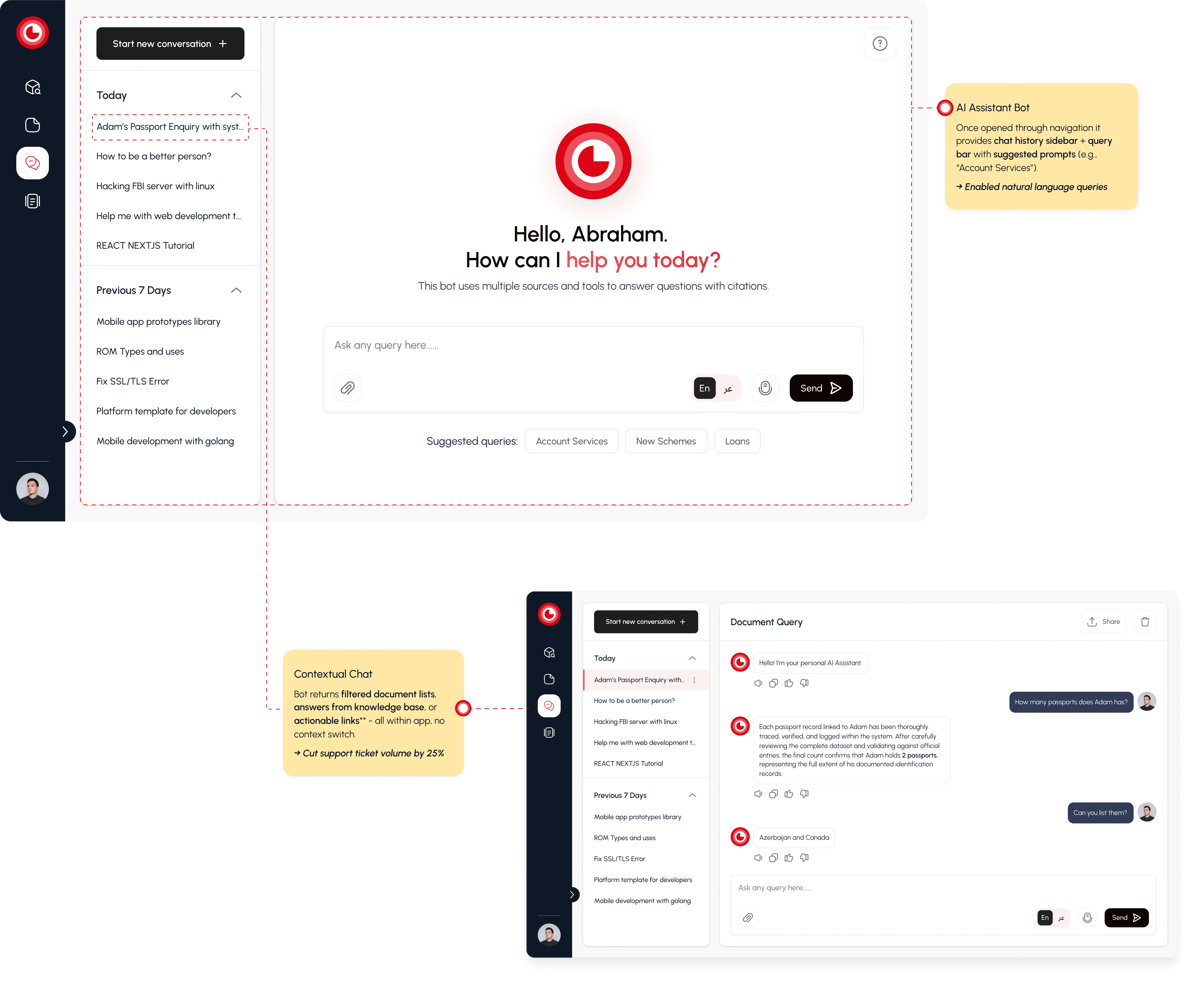

User Module: Read-Only Access👇
→ Result: Zero risk of accidental edits, full transparency for auditors, and a 30% faster read-only workflow compared to legacy shared drives.
The streamlined interface became a key internal selling point - even read-only users felt empowered, contributing to the overall 4.6/5 satisfaction score.
Results and Reflection
After full internal rollout across departments, the RBank Management System delivered measurable gains in efficiency, accuracy, and compliance.
The unified platform eliminated scattered workflows, empowered every user role, and turned a once-fractured process into a seamless, audit-ready operation.
Results (Post-Launch: April 2025)
45%
Faster Document Retrieval
4 min → 2.2 min
30%
Reduction in Manual Errors
1 in 3 → 1 in 10
60%
Increase in Audit Transparency
Manual logs → real-time + export
4.6/5
Internal User Satisfaction
Post-adoption survey
“The clean structure, role clarity, and audit transparency have transformed how our teams operate daily.”
— Client Project Manager, Business Organization
Reflection
Led enterprise-grade system design from chaos to clarity
Bridged design, AI, and backend through shared language and artifacts
Delivered measurable operational ROI in a highly regulated environment
Next Evolution?
Predictive task routing using behavioral data - already in discussion with the client.